












Streamly
What does this data tell you about Streamly’s positioning in the market relative to its competitors, and what insights can we draw about where future growth could come from?
Case Exhibit
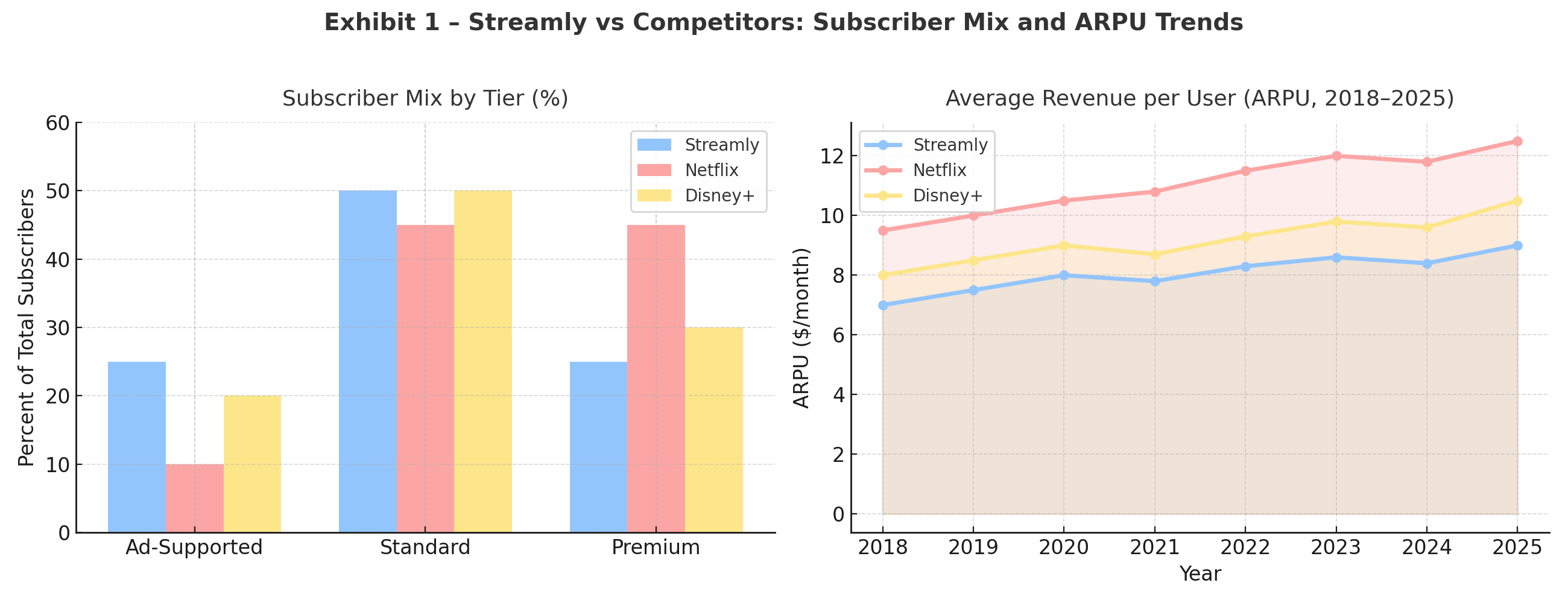
Looking at Exhibit 1, Streamly clearly relies more on its ad-supported tier than competitors, with roughly one-quarter of its users on that plan compared to only 10 percent for Netflix and 20 percent for Disney+. This suggests that Streamly has focused on accessibility and scale, attracting more price-sensitive customers but limiting monetization potential. The right-hand chart confirms this: Streamly’s ARPU lags behind both competitors and grows more slowly, reflecting its heavier exposure to lower-priced tiers and fewer Premium users.
This mix explains why Streamly’s revenue growth has stalled even as total subscribers have likely continued to rise. The company has succeeded in capturing reach but at the cost of profitability. To move forward, Streamly should aim to rebalance its portfolio by improving monetization from its ad-supported tier through better ad targeting and partnerships, while also strengthening its Premium offering to drive upgrades. In short, the ad-supported plan is helping maintain user scale, but Streamly needs to enhance its value per subscriber to keep pace with competitors.