












Last Mile
Kearney pulled market data on the last-mile delivery landscape. The CEO is particularly curious about how the margin profile of residential delivery compares to RapidShift's current business. Take a look at Exhibit 1. What are the key takeaways and how does it affect your view of the opportunity?
Case Exhibit
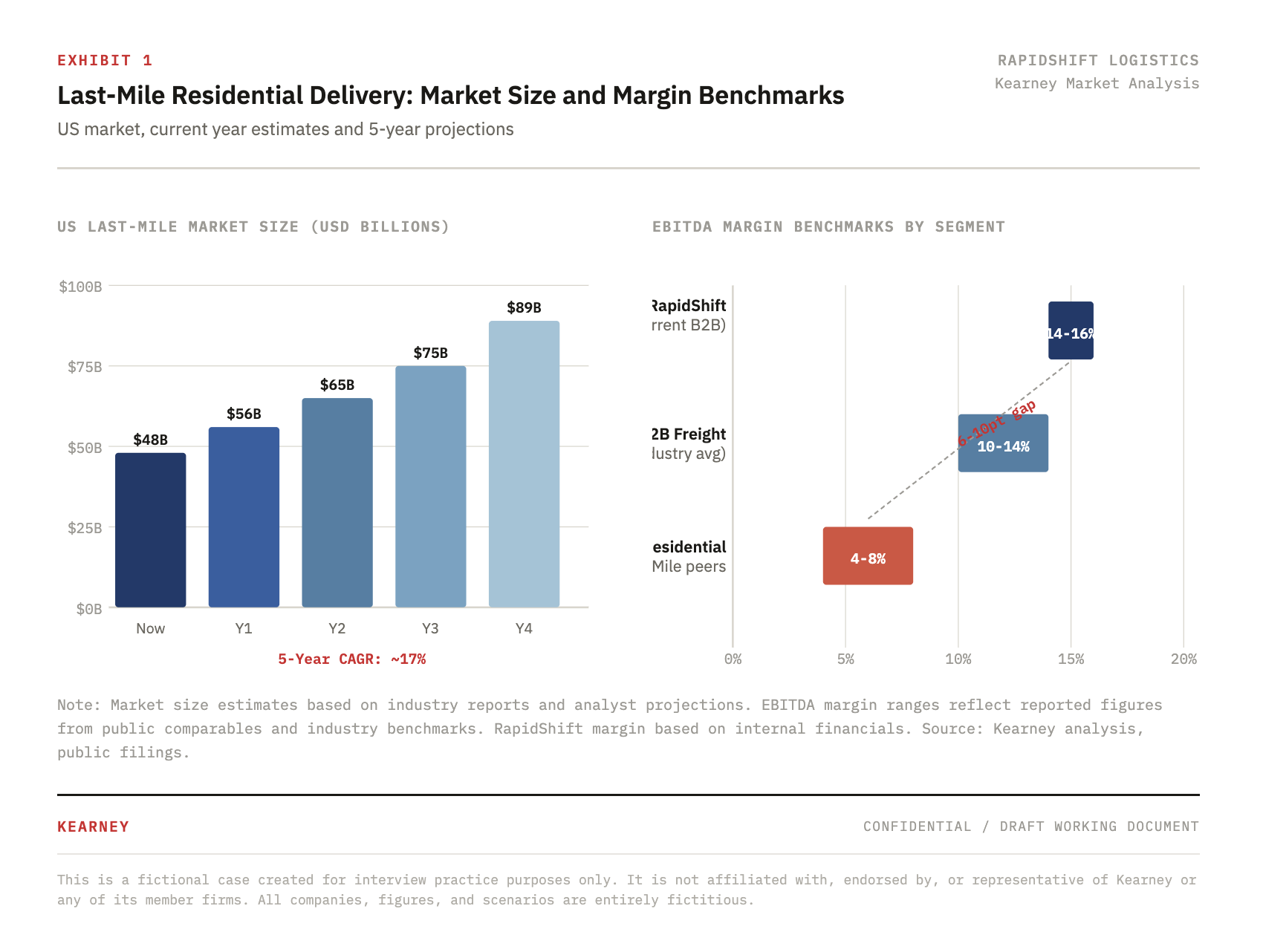
The exhibit shows two things worth addressing together. First, the last-mile residential delivery market is large and growing, which on the surface makes it attractive. Second, and more importantly, margin profiles in residential last-mile are significantly lower than in B2B freight, with the major players in residential delivery operating at 4 to 8% EBITDA margins compared to RapidShift's current 14 to 16% range.
The structural reason for this gap is worth flagging: residential delivery involves far more stops per route, lower average package value, higher failed delivery rates, and significant consumer service expectations that drive cost. B2B freight benefits from larger drop sizes, predictable schedules, and fewer exception handling requirements.
This shifts the framing of the question. Entering residential last-mile is not straightforwardly attractive on margin grounds. The more important question becomes whether RapidShift can enter at a cost structure that is competitive, or whether there is a specific niche within residential delivery, such as dense urban routes or premium same-day delivery, where margins are more defensible. The entry decision should be contingent on finding a route to margins above the market average, not just capturing volume.